
Hot water changes everything about pump selection. A standard borehole pump that runs happily at 20 °C will fail early at 80 °C: its insulation, seals, lubricants and clearances were never designed for it. If your project involves geothermal wells, hot springs, greenhouse heating or aquaculture, you need a pump that is heat-rated from the motor out.
This guide explains how to choose a hot water borehole pump — the QJR series, the heat-resistant sibling of our QJ family.
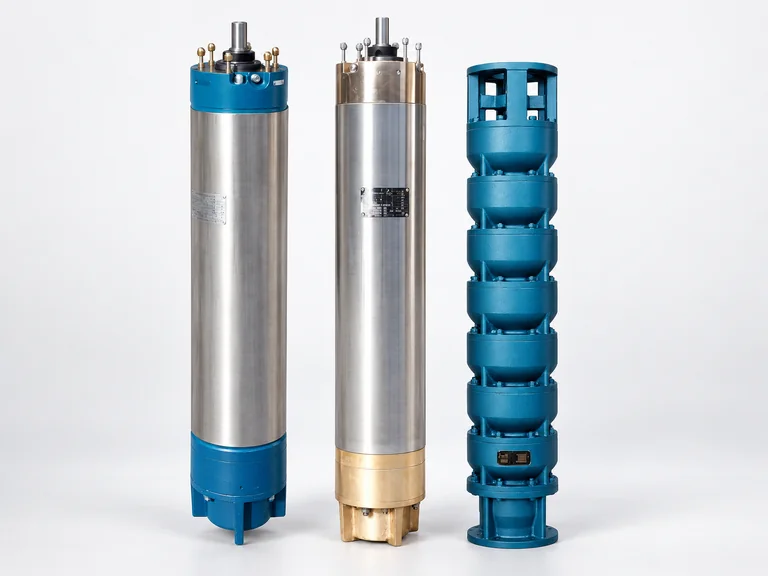
What Makes a Hot Water Pump Different
A hot water borehole pump is not a standard pump with a different label. The QJR uses a heat-resistant, water-filled submersible motor: the chamber is filled with distilled water (and must never run dry), and the motor, seals, cable and insulation are all specified for sustained high-temperature operation. Standard QJ borehole pumps are for cool water; the QJR is the same family re-engineered for heat.
The practical result: the QJR handles water up to 100 °C as standard, and above 100 °C with a special build (the group catalogue shows versions up to 120 °C with stainless or tin-bronze housings, confirmed with the factory per order).
The Rule That Decides Everything: Temperature vs Submergence
The hotter the water, the deeper the pump must sit. This table comes from the QJR instruction manual (June 2017 edition) — get it right and the motor stays within its design limits. Note that exactly 100 °C falls into the ≥70 m tier; at exactly 120 °C the configuration must be confirmed with the factory per order:
| Water temperature | Required submergence below the dynamic water level |
|---|---|
| 50–<80 °C | ≥ 40 m |
| 80–<100 °C | ≥ 50 m |
| 100–<120 °C | ≥ 70 m |
Two implications buyers miss: a shallow well with very hot water may be impossible to serve safely at any price, and quoting a pump before you know both the water temperature and the dynamic water level is guessing. We always ask for both numbers first.
Water Chemistry: The Other Half of the Decision
Geothermal water is often highly mineralized, and the QJR is built with a wider water-quality window than clean-water pumps. The manual’s limits:
| Parameter | Limit |
|---|---|
| Mineralization | ≤ 4000 mg/L |
| Chloride (Cl⁻) | ≤ 600 mg/L |
| Sulfate | ≤ 1000 mg/L |
| Hydrogen sulfide (H₂S) | ≤ 1.0 mg/L |
| Corrosive CO₂ | ≤ 2.5 mg/L |
| Ammonium | ≤ 1.0 mg/L |
| Dissolved oxygen | ≤ 2.5 mg/L |
| Fluoride | ≤ 4.0 mg/L |
| Solids | ≤ 0.01% |
| pH | 6.5–8.5 |
| Oil content | Not permitted |
Within these limits the QJR is in its element. Outside them — oil contamination, extreme salinity, unusual chemistry — send us the analysis and we will confirm materials with the factory before quoting.
Worked example: your dynamic water level is 30 m below ground, and you plan to install the pump at 70 m. Your actual submergence is 70 − 30 = 40 m. For water at 80–<100 °C the manual requires ≥50 m, so 40 m does not meet the requirement — you would either lower the pump to 80 m (submergence 50 m) or confirm options with the factory. Check your own numbers the same way before asking for a quote.
What to send us for a fast selection: water temperature, dynamic water level, well diameter, required flow, TDH, and a recent water analysis if you have one.
Choose by Scenario
Geothermal heating
For space heating, greenhouse heating and process heat: specify by flow and TDH first, then confirm the temperature and submergence fit. For a hotel or facility that needs constant-pressure hot water, the package can include a GBS variable-frequency constant-pressure system with heat-rated cable, wellhead fittings, thermometer and butterfly valves.
Hot spring and bathing facilities
For resorts, spas and bathing water: heat-resistant pump plus heat-resistant cable and control gear as one matched package. Water quality matters as much as temperature here — mineralized spring water is exactly the QJR’s design window.
Aquaculture and agriculture
For temperature-controlled fish farming, greenhouse irrigation and livestock water: steady temperature and continuous duty matter more than peak flow. The QJR’s water-filled, heat-resistant motor is built for that kind of sustained work.
The QJR Family at a Glance
The QJR mirrors the QJ range, so selection is familiar if you already know QJ:
| Parameter | Range |
|---|---|
| Well diameter | 150–400 mm |
| Flow | 5–600 m³/h |
| Head | 6–600 m |
| Motor power | 3–250 kW |
| Voltage / frequency | 380 V / 50 Hz standard; custom 60 Hz, 220 V, 660 V |
| Temperature rating | ≤100 °C standard; above 100 °C special build (up to 120 °C per catalogue) |
Ranges cover different models and stages — maximum flow and maximum head do not occur simultaneously on a single pump. Model naming follows the QJ convention: e.g. 250QJR50-160 = 250 mm well, 50 m³/h, 160 m head.
Installation and Package
Order the pump as a working package, not a bare unit: heat-resistant pump, heat-resistant submersible motor, heat-rated cable, control panel and wellhead fittings. For hotels and bathing facilities, add the GBS constant-pressure water supply system. The motor chamber must be filled with distilled water before operation — and never run dry.
The Drawbacks of Geothermal Pumping — and How to Solve Them
Geothermal energy is reliable, but it is not free of problems. Here are the four failure patterns we see most often, and what actually prevents them.
1. Heat Kills Motors and Seals Early
High temperature accelerates everything: insulation ages, seals harden, lubricants break down. A pump that was never designed for hot water will fail early at high temperature.
Solution: use a heat-rated pump, not a standard one. The QJR’s water-filled, heat-resistant motor is built for sustained hot-water duty. Install it to the temperature-versus-submergence table (hotter water = deeper setting), and never run the chamber dry — that is the fastest way to kill the motor.
2. Mineral Scale and Corrosion
Geothermal water is often rich in minerals. Scale builds up on impellers and inside pipes, while chlorides, hydrogen sulfide and CO₂ attack metal parts.
Solution: test the water first. Within the QJR’s window (mineralization ≤4000 mg/L, chloride ≤600 mg/L, pH 6.5–8.5, no oil), the pump is designed for it. For aggressive water, choose stainless or tin-bronze wetted parts (confirmed with the factory), and schedule periodic descaling rather than waiting for a failure.
3. Falling Water Levels and Depleted Wells
Over-pumping drops the dynamic water level. Pumping harder then makes it worse: more heat stress, more sand, and eventually a dead well or ground settlement.
Solution: size to the aquifer, not to your wish list. Track dynamic water level over time, cap extraction at the well’s safe yield, and where required, reinject used geothermal water to sustain the resource. If the level keeps falling, lower the pump or reduce duty — do not simply let it run closer to dry.
4. Sand and Solids Accelerating Wear
Sandy wells erode impellers and wear rings fast, especially at high flow.
Solution: if you see sand, act early — check the source (casing damage, wrong pump placement, aquifer stress) and correct it before the wear becomes irreversible. Solids content must stay within the manual’s ≤0.01% limit.
A Note on Heating-Season Operation
In northern China, geothermal wells supplying space heating typically run continuously through the heating season (November to March), with output adjusted to outdoor temperature, often via a heat exchanger feeding a clean secondary loop. After the season, wells reduce duty and pumps are serviced — insulation tests, seal checks and descaling. Many operators also reinject used geothermal water to sustain the aquifer. The lesson for any buyer: a geothermal well is a long-term utility, so correct sizing, heat-rated equipment, water management and off-season maintenance are what keeps it running year after year.
FAQ
Our geothermal water is 95 °C. Can we use your pump?
At 95 °C the water is within the QJR’s standard ≤100 °C rating — but installation depth decides. For water at 80–<100 °C the unit must sit at least 50 m below the dynamic water level (see the worked example above). Send us your dynamic level and required flow and we will check the fit.
What if the water is above 100 °C?
That is a special build — the group catalogue shows versions up to 120 °C with stainless or tin-bronze housings, requiring at least 70 m submergence. We confirm the exact configuration with the factory before quoting.
Can you build for 60 Hz or 220 V?
Yes — 60 Hz, 220 V and 660 V are listed customization options. Price and lead time are confirmed per order.
The water has oil in it. Can we still use the QJR?
No — oil content is explicitly not permitted. Tell us what is in the water and we will review options with the factory.
Next Step
Browse hot water and geothermal pumps, or send your water temperature, dynamic level, flow and head through the contact page or on WhatsApp at +86 17695696995. For constant-pressure hot water supply to a hotel or bathing facility, ask about the GBS constant-pressure package.